Tracking and cookies.
The ‘Content’ of War in the Age of AI and Influencers
Iain Overton asks whether war has become just another form of online spectacle – shareable, and stripped of its human cost
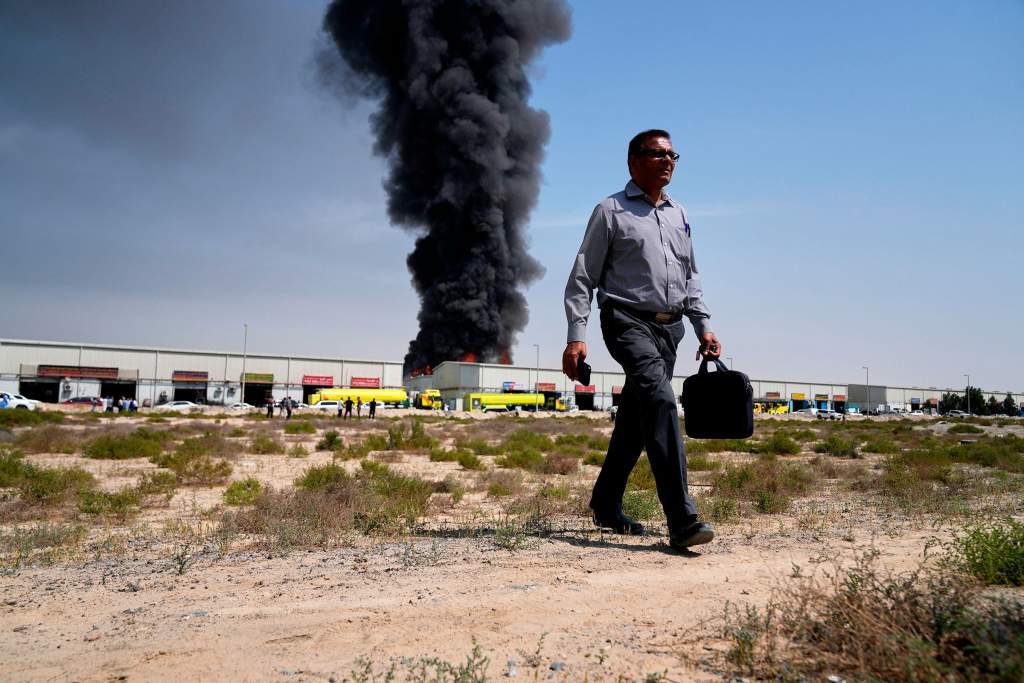
Photo: AP/Altaf Qadri
The bright lights across the Dubai sky on the night of 1 March 2026 were not shooting stars. They were air defence systems intercepting Iranian drones and missiles launched towards the Gulf allies of the United States.
For a city that has long marketed itself as an amoral sanctuary in the desert, a place where money could buy insulation from taxmen and trouble, it was a disturbing lightshow that offered perfect online subject matter.
Some residents ran for cover. Others reached for their phones.
If you have an account or have previously purchased content, log in first:
or if this is your first purchase: