Tracking and cookies.
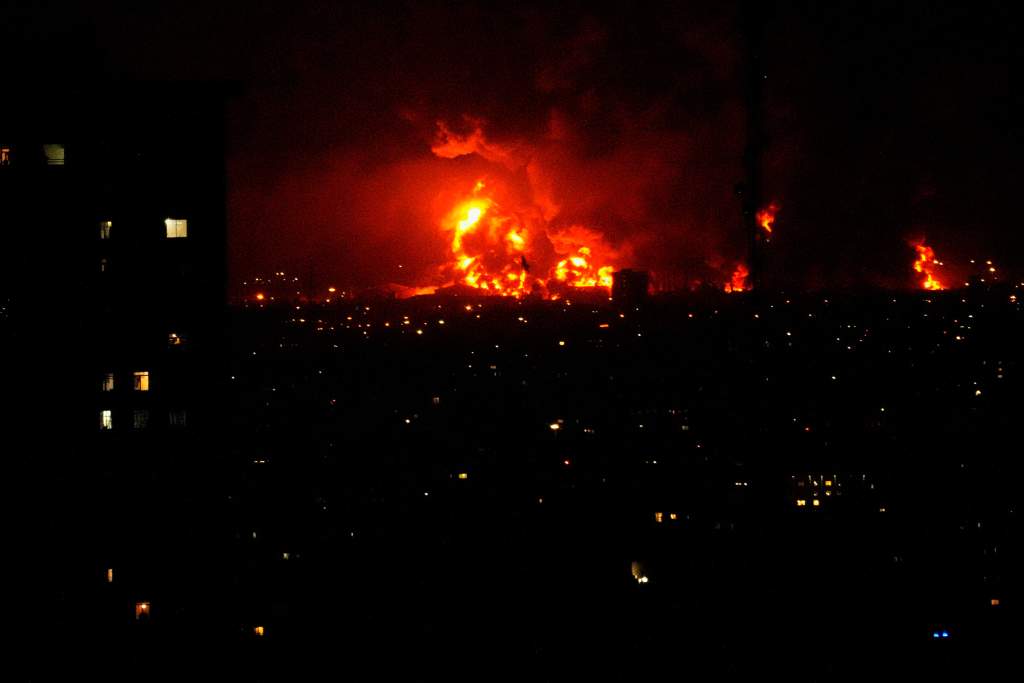
The Iconography of Destruction
Peter Jukes explores how the US President has spent his life riding the storm –
but how much longer can he avoid reaping the whirlwind of his ‘American carnage’?
While pundits and politicians ponder the ultimate objectives of the war on Iran which Donald Trump, in league with Israeli Prime Minister Benjamin Netanyahu, launched on 28 February, it is worth putting this tumultuous moment in context against the rationale of the American President’s career so far – which has always been a deep and dynamic relationship with the irrational.
We can try to surmise how the MAGA leader’s objection to “forever wars” fits in with the massive bombardment of a country that is as mountainous and impregnable as Afghanistan, and with double the population of Iraq. We can puzzle over the continuously improvised war aims. Is it regime change and setting the Iranian population free? Defending Israel? Or hunting down any possible precursors to nuclear WMDs?
But this search for cue and motive would miss the point about Trump – he is a master of chaos. That’s where he finds meaning and strength. His supporters also thrive in the wake of his psychological and cultural whirlwind.
“I love the smell of deportations in the morning,” Trump wrote to great applause on social media last year. “Chicago is about to find out why it’s called the Department of War,” he added, along with three helicopter emojis.