Tracking and cookies.
‘Hockney’s Art Was
as Much an Intellectual Exercise as It Was
an Expression of the Joy He Took From Being Alive’
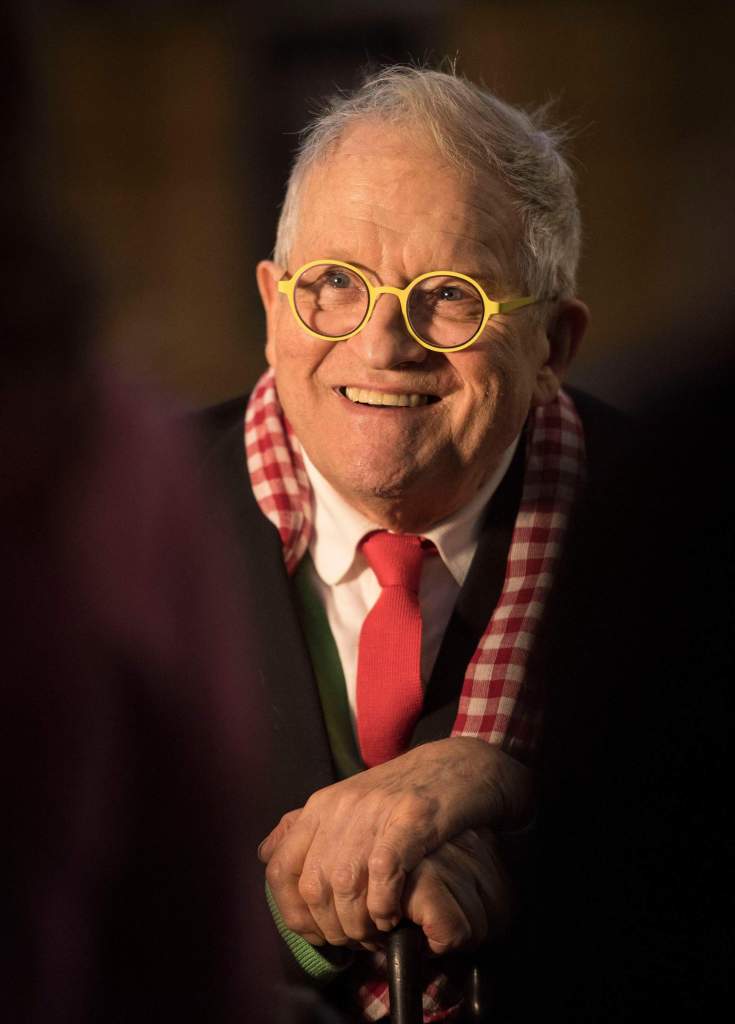
Henry Porter remembers the colourful life and work of the celebrated British artist David Hockney, who died this month
I was 11 or 12 when a classmate asked me which I preferred, Hockney or Warhol. I had heard of neither. But in a very few years, I was drawing, studying the history of art, and learning about their work.
Eventually, I would meet both men – Warhol in a nightclub in the 1970s when he was wearing a kind of bodycam and asked me for my party piece; and, much later, Hockney, outside Vanity Fair’s Oscars dinner in Los Angeles, where we smoked cigarettes and talked about our dachshunds.
If it hadn’t been for the Camel Lights and the dog talk, I’m sure I’d have been struck dumb, because by then, I understood the scale of Hockney’s operations and had come to think of him as a kind of civil engineer; a director of grand projects, which in their ambition equalled those of Matisse, Monet, and, especially, Picasso, with whom he had a lifelong dialogue.