Tracking and cookies.
‘A Polar Bear on an Iceberg? Here’s This Picture of Catastrophe and You’ve Totally Depoliticised It’
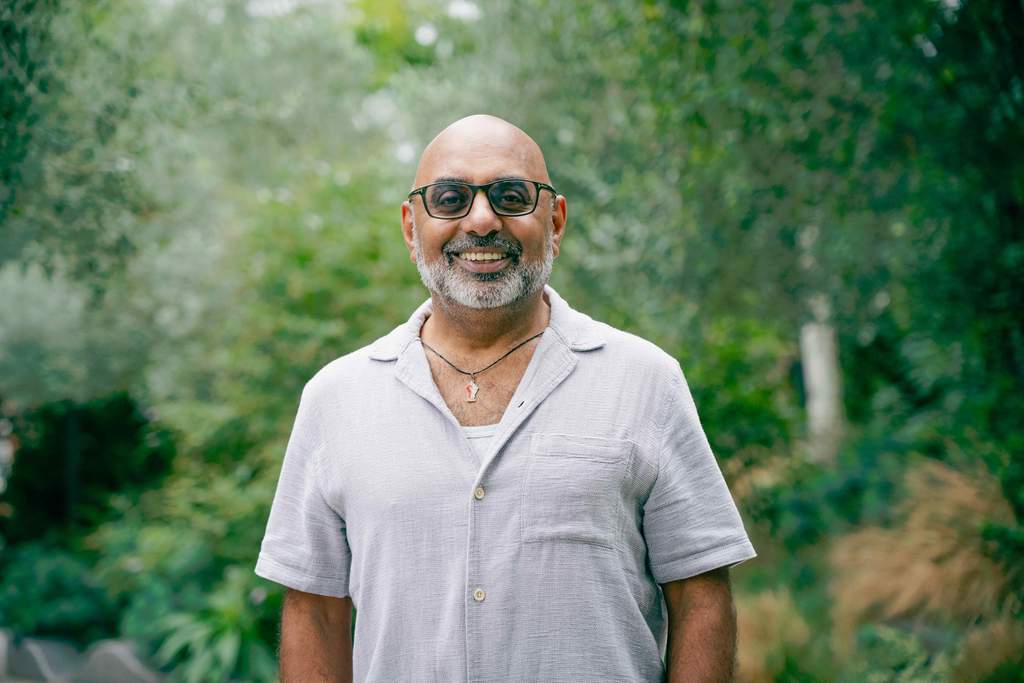
The climate crisis can’t be solved without a commitment to fighting injustice at the same time – Asad Rehman, chief executive of Friends of the Earth, sat down with Hardeep Matharu to explain why
HM: Last August, you became the first person of colour to lead Friends of the Earth, as its chief executive, in its more than 50-year history. You’ve had roles at Amnesty International UK and War on Want. Fighting injustice is clearly threaded through your journey. How did your background and upbringing shape you as a political activist?
AR: I was born in Pakistan and my parents came to the UK as economic migrants. They ended up in the north-west of England, where a lot of people from our part of Pakistan, in the Punjab, were originally brought over to work in the factories and mills. We lived in Burnley, which was one of the places that was experiencing rapid deindustrialisation. It was a very white, working-class area, and I was one of the first non-white kids in my primary school. People often ask: how did you get political? And I say: I had no choice, because of the context and reality of racist violence I grew up in.
The National Front used to sell newspapers in my secondary school. Every day, there would be some form of racist abuse, some physical attack. People would pour beer on the Asian women. They would use dogs to terrorise them when their husbands went to work. The house we lived in was firebombed and constantly scrawled with swastikas. And the police weren’t doing anything. In school, it was basically paki-bashing. The break-time bell rang and all the non-white kids would pretty much barricade themselves into one classroom because, if you were down the corridors or in the playground, you would be attacked. Teachers were too scared to do anything.
Racists forced me to learn more about black history because of the stuff they’d say to us. You’d get beaten up, but it would spur me on. What was going on on television screens would play out on the streets and at school. When Roots first aired [in 1977], they’d say to us: ‘say your name is Kunta Kinte’. But then, when in the show [the character’s grandson is] given Chicken George as his slave name, the kids would say to us: ‘say your name is Chicken George’ – and we’d say, ‘no, it’s Kunte Kinte’. Apart from that there was Mind Your Language, Love Thy Neighbour, It Ain’t Half Hot Mum – popular, casual racism was on TV screens.
At 14 or 15, I organised a school strike against racist violence – we would go to school but not go in. It was a necessity just to organise. We moved to another area which had slightly more non-white people and an Asian community, because it was safer, but that area was close to the Burnley football ground – so on Saturdays, you’d get football fans come through doing a bit of paki-bashing, smashing a few windows. Every morning, all the kids going to school would get together – we’d put the younger kids in the middle, and then we’d head off – if you went by yourself, or one or two, you’d definitely be attacked. So it was organising without thinking it was organising – just for safety.